Electronic commerce, commonly known as e-commerce, refers to the process of buying and selling products online. My name is Jesse Van Doren and I pride myself on having extensive knowledge on e-commerce and its future trends. Through ideation sessions, workshops and speaking engagements given by me, you can find out how your business can enter and succeed in the e-commerce world and how the future of e-commerce can positively impact your business.
Types of e-commerce:
1. Business to Business (B2B): One business sells directly to another business.
2. Business to Customer (B2C): A business sells directly to consumers.
3. Consumer to Consumer (C2C): One consumer is selling to another via auction or social media, such as eBay or Facebook’s marketplace.
What will you gain from e-commerce?
1. For businesses:
- It can reduce costs by limiting the expenses of owning and running a physical store.
- It is faster and more convenient than most traditional business transactions.
- It can reach consumers in areas where geographical barriers would have prevented the expansion of physical retail location.
- It can also increase revenue by allowing businesses to reach more customers than physical locations alone, and also has big potential to influence more in-store purchases.
2. For customers:
- It reduces costs by offering customers more options.
- Customers get a less invasive experience.
- Ease and convenience for customers.
- Wide range of products and services.
- Adequate information.
The future of E-Commerce
E-Commerce growth is a continuous exponential curve, however, it only represents 11.9% of retail sales. Despite, fast growth and relatively low market share suggests that there is still enormous opportunity for new players to outpace traditional industry leaders.
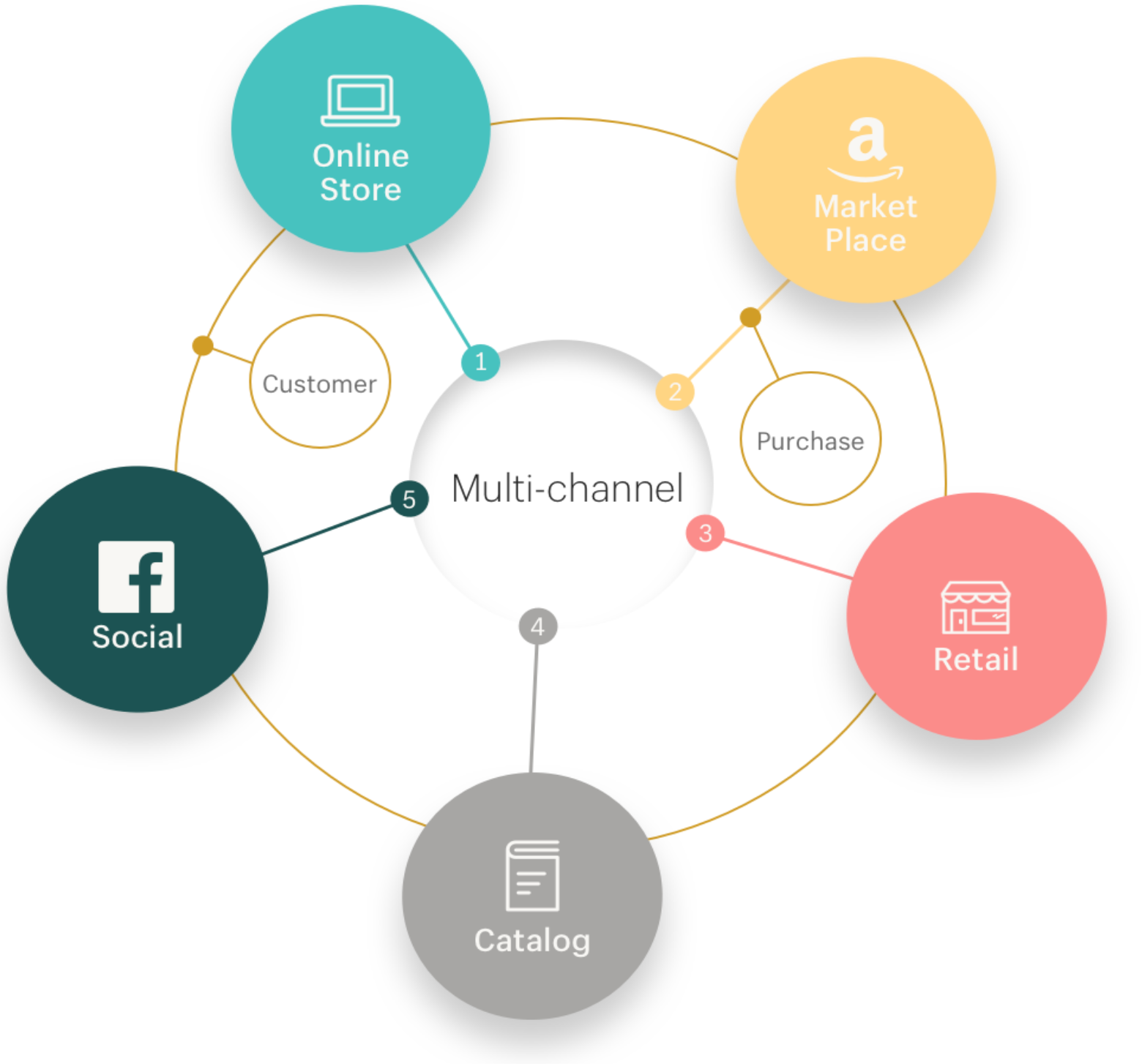
The main difference between many current e-commerce retailers and future e-commerce companies is the omni-channel vs. Multi-channel.
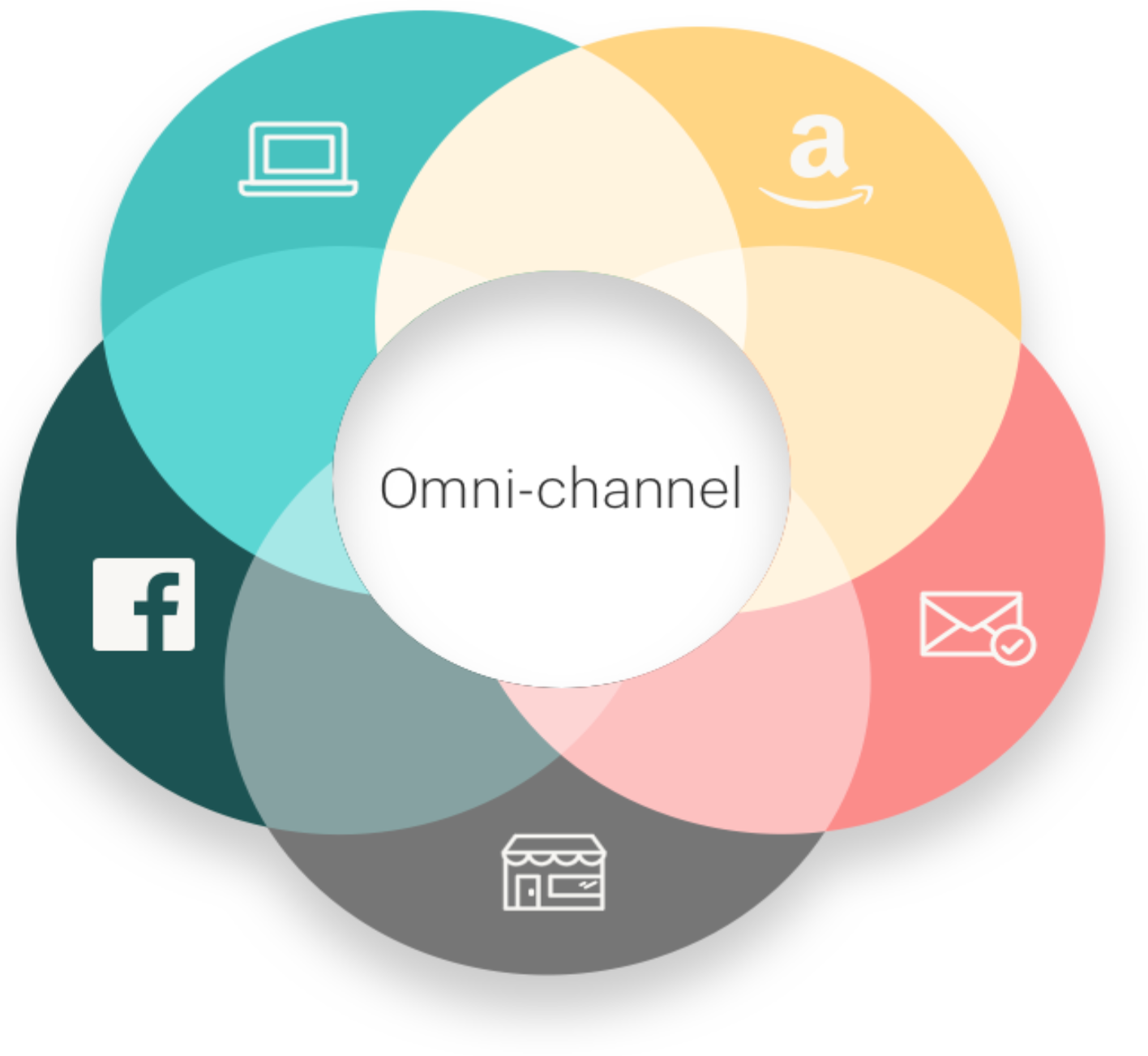
It is estimated that most people (86%) shop around on at least two touch-points, i.e. channels. This could be beneficial for online retailers as shoppers who do this tend to spend more time throughout the purchasing process.
Multi-channel management is focused on finding out the answer to questions such as who, what, where, when and why people are buying from you on each individual channel you sell your products on. It is being able to amplify when and where it is needed throughout your channel mix, finding opportunities in your data, and implementing creative or budget changes to capitalize when opportunities arises.
Even though it may result advantageous, managing multi-channel without properly setting up and maintaining your inventory management system can be futile. It is also important to keep in mind that no strategy is worth anything if you can’t measure results.
In order to survive and strive in the future of e-commerce, you need to build your store on infrastructure that can manage and maintain multi-channel retailing with minimal input from you.
Automation and Artificial Intelligence
No e-commerce platform has yet offered comprehensive automation as an accessible feature. Companies that are or have previously automated have either created their own in-house process - which results very costly - or partnered with third-party applications.
Deep learning is what makes AI (Artificial Intelligence) invaluable for e-commerce. Its potential is boundless. Most companies implement AI in online shopping and for analyzing customer data and language in order to create hyper-personalized content. AI can also help us predict our sales for some of our clients based on visitor behaviour.
Mobile is the future but adds purchase complexities
Even though most people browse on mobile, the trend of browsing has now shifted and they are also making purchases through mobile devices. In the U.K, for example, mobile spending tripled in the first half of 2017.
Some people like window shopping and other users feel more comfortable making purchases through their phones. Yet, the focus of e-commerce business should not be on tracking customers’ behaviour but rather on making their on-site experience as easy and appealing as possible.
Native social-selling is delivering
According to some studies, the average digital adult spends 5 hours per day on their devices. Out of these 5 hours, 50% is spent on social media, whether it’s scrolling through the apps or messaging contacts. Many of these digital adults are purchasing products directly via social media platforms, such as Facebook.
E-Grocery
Consumers increasingly shift from physical to online grocery shopping. This also increases with e-commerce giant Amazon acquiring Whole Foods Market, allowing for the creation of more e-grocery strategies and trends.
What you can expect from an e-commerce speaker
Want to learn about how e-commerce can help your business? Concerned with future e-commerce trends and its impact in the business industry? I pride myself of having extensive knowledge in how you can build your business with e-commerce being a major pillar within your organization. If you are looking for an e-commerce speaker, I give keynote presentations on how to implement and master e-commerce at your organization. I talk about the different implementation systems, the different types and future, and how you can increase revenue by implementing adequate strategies and systems. I do this by helping you gain valuable insights into customer behaviour and customer satisfaction when implementing e-commerce and how your business can improve with the ever-expanding opportunities and benefits of electronic commerce.